In this article:
RF-4C
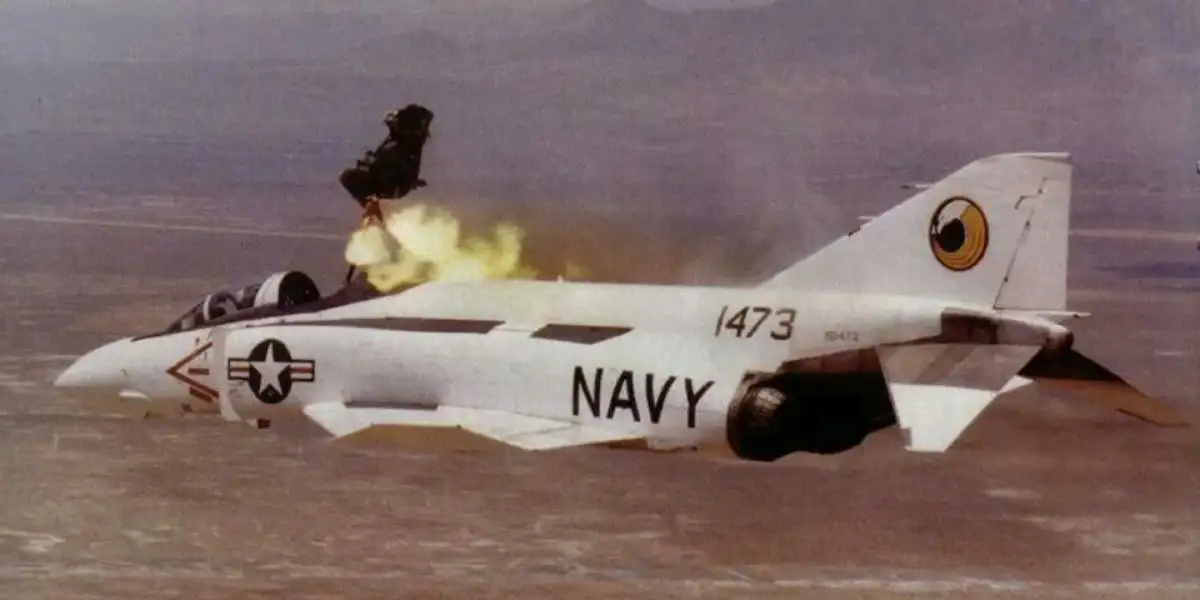
First flown in May 1958, the Phantom II originally was developed for U.S. Navy fleet defense. The U.S. Air Force’s first version, the F-4C, made its first flight in May 1963, and production deliveries began six months later.
In the early 1960s, the USAF recognized the need for more tactical reconnaissance aircraft to reinforce the RF-101s then in service. The USAF chose a modification of the F-4C fighter. The RF-4C development program began in 1962, and the first production aircraft made its initial flight on May 18, 1964. The Air Force officially accepted a total of 499 RF-4Cs.
The RF-4C can carry a variety of cameras in three different stations in its nose section. It could take photos at both high and low altitude, day or night. The RF-4C carried no offensive armament, although during the last few years of its service some were fitted with four AIM-9 Sidewinder missiles for defense.
The 16th Tactical Reconnaissance Squadron became the first operational unit to fly the RF-4C. In October 1965 that unit deployed to Southeast Asia to provide photographic reconnaissance of the growing conflict in South Vietnam. In the following years, RF-4Cs flew reconnaissance missions around the world, including Desert Shield/Desert Storm in Iraq in 1990-1991. The Air Force retired all of its RF-4Cs by 1995.
The ultimate test of man and machine
The following story appeared in Volume II, No. 1 issue of Smoke Trails, Quarterly Journal of the F-4 Phantom II Society.

As with any item of military equipment, the ultimate test of man and machine is not always combat. Nothing could be closer to the truth for Major Mike Sams, Captain Mike Bell, and RF-4C 64-1073, than the series of events following an inflight emergency and crew ejection.
Saturday, May 15, 1982 was to be a routine day for pilot Mike Sams, then a Captain, and back-seater Mike Bell, then a Lieutenant, both with the 165TRS/123TRW Kentucky Air National Guard. On this day the two Mikes were to be part of a flight of RF-4C from their home base in Louisville to Savannah, Georgia. Recce Phantom 64-1073, their mount for the trip, had just returned from depot maintenance and sported a fresh paint job. While preparing for take-off, the crew chief Sgt. John Hourigan, joked about not scratching the paint on his newly overhauled aircraft–perhaps a harbinger of things to come.
During an interview for this article, Major Mike Sams talked of being airborne on that fateful day for around 45 minutes flying over the Cherokee National Forest, about 40 miles south-west of Knoxville, Tennessee when things began to happen. Events occurred as follows. A loud explosion on the left side of the Phantom brought on a fire warning light. Sams moved the left engine throttle to idle and then shutdown. Next, an explosion on the right side brought a fire warning light for that engine, with the pilot reacting by moving this engine throttle to idle.
Backseater ejected after pilot
He then pulled the aircraft into a zoom climb, going from about 500 feet altitude to 1500 feet with the airplane rolling to a 45° angle. Pilot Sams was able to transmit one radio message that said it all, “Hey Jack, I think I’ve got a problem.” If this was not enough more bad things were happening. Smoke and heat entered the cockpit as all electrical systems, including the radio, failed followed by a more serious failure of the flight control systems.
The KY ANG crew no longer in control of their aircraft made a quick decision to eject. Mike Sams believes that only about 10-15 seconds passed from the first trouble to initiating the ejection sequence. But this was not to be a textbook ejection. A normal F-4 ejection sequence as explained by the Major calls for the back-seater to go out first, followed by the front-seater. Unknown to Mike and Mike, an internal fire had burned through Bell’s emergency canopy release line causing his canopy not to blow.

Meanwhile the Phantom ejection sequence device ejected Sams leaving the back-seater still in the airplane. With 64-1073 loosing altitude, Bell activated other seat ejection devices with no luck. Finally at 600 feet the canopy blew after he engaged a normal canopy release, the release used to raise the canopy for a normal ground egress. With the second canopy gone, the ejection sequence continued followed by another successful ejection from the stricken RF-4C.
Ejecting at a higher altitude, Mike Sams floated down under his parachute with a good vantage point to see Bell’s chute open and the burning Phantom pass by looking like a “skyrocket.”
Off flying status for three months
Bell landed virtually uninjured near a group of loggers that rushed to his aid. The burning airplane plowed into a tree covered ridge line, exploding into a fireball. Major Sams, knowing a collision with a tree was unavoidable, guided his parachute towards the smallest tree in sight before making contact. Later, safe on the ground, he discovered that he suffered from a separated shoulder and compression fractures of the vertebrae. Both men remained on the ground for about two hours before being picked up by an Army UH-1 helicopter dispatched from Knoxville.
More than three years after his quick exit from RF-4C 64-1073, Major Mike Sams reflected on the incident. He stated that he was off flying status for three months to recover from injuries obtained from the ejection. Sams, with over 2000 hours in the F-4, credits the excellent ejection seat training courses from the Kentucky AG Life Support people for pulling him through on that not-to-be-forgotten day and the professional work done by base personnel that maintained the ejection seat and life support equipment that saved his life. As to the ill-fated Phantom 64-1073, Major Sams mentioned that material failure on the aircraft probably was the cause for its loss.
In skies over rugged terrain, Mike Sams and Mike Bell met the ultimate test of man and machine and passed with flying colors, in no small measure to their skills, the instructors that prepared them for the task, and to the professionals that made sure their equipment worked when called upon.

Photo credit: TSgt. G. Dennis Plummer / U.S. Air Force


