In this article:
Vietnam-era family of Huey helicopters

The Bell UH-1Y is a combat-proven utility helicopter slated to support the US Marine Corps (USMC) missions for the next four decades. The Yankee engages threats, delivers or exfiltrate personnel and performs under the most punishing operating conditions, making it the ultimate tactical utility helicopter. The Bell UH-1Y was first deployed with the USMC in 2009. The “Yankee” operates in the most extreme environments, from Arctic cold to desert heat.
The Bell AH-1Z is the most significant upgrade ever made to the venerable and battle-proven H-1 helicopter. At the heart of the upgrade is a new four-bladed, all-composite rotor system. Upgraded engines and transmissions, integrated digital cockpit featuring multifunction flat panel displays, increased payload capabilities, and crash-worthy seating. The AH-1Z is equipped with an integrated advanced fire control system and the capacity to support multiple weapons configurations. The AH-1Z platform also provides increased load carrying ability, greater range and survivability, and has a smaller logistical footprint.
The Venom and the Viper are based on the Vietnam-era family of Huey helicopters, the UH-1 Iroquois and the derivative AH-1 Cobra.
Why USMC didn’t use the Apache and Black Hawk helicopters?
In 1980s every US branch (as well as many allied nations) bought the Black Hawk and its variants and the Apache. So why didn’t the USMC adopt the Seahawk and a navalized Apache?
Damien Leimbach, US Air Force (USAF) avionics technician, explains on Quora;
‘I had this same discussion with a friend of mine that is a Marine Huey crew chief.
‘The answer is pretty simple, it’s because the Seahawk and Apache don’t share parts. But the explanation as to why that matters so much goes back a bit.
‘The original cobra was a derivative of the Huey airframe. They used the same engine, transmission, flight controls, rotor blades, tail boom, etc. In fact, when first built it was called the “Huey Cobra.”
‘This lineage is easy to see with the naked eye, especially the first gen Cobras that had the rounded bubble canopy.
‘Note the similarities in lines and general appearance.

‘It made sense for the Army and Marines in the 1960’s to adopt a system that used so many common parts as the Huey they already had in service, as it streamlined supply and training.
The Fulda gap’s
‘But the Army and Marines have different missions. The Army’s job is to confront other Armies, who will probably have tanks. During the cold war it was expected that the US Army would have a confrontation with Warsaw Pact forces in Europe, as a million screaming Soviets would pour through the Fulda gap with their tanks leading the way.
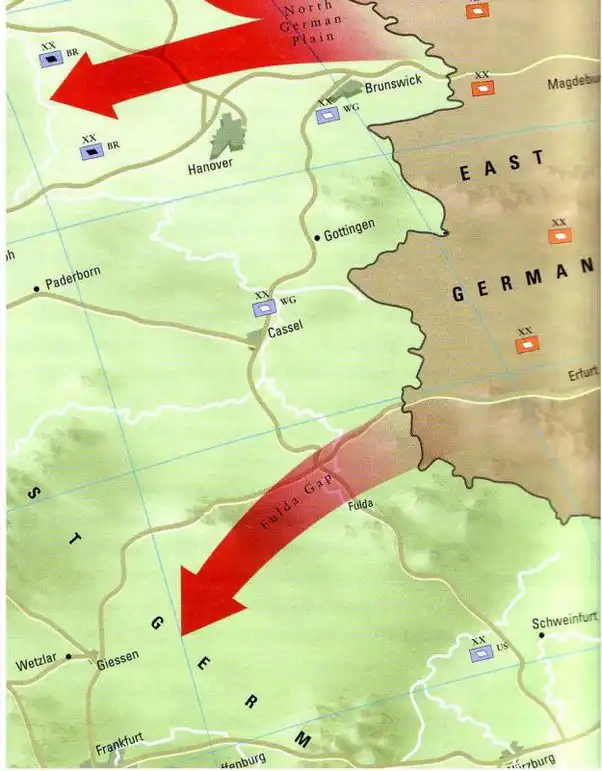
‘The gap was so important that the US alone dedicated the entire V and VII Corps to its exclusive defense, comprising several infantry divisions, several armored divisions, several cavalry regiments and multiple helicopter brigades. Here are US Army assets in West Germany at the time.
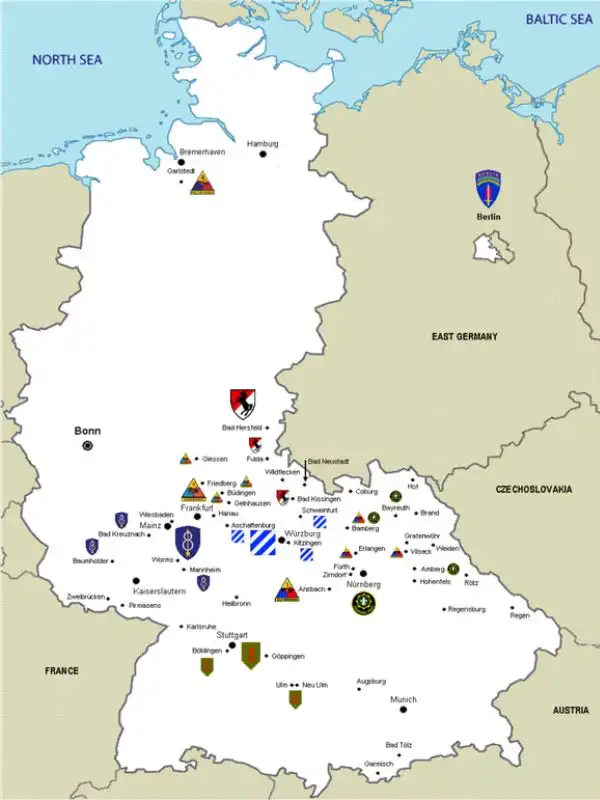
‘The Army wanted something with more anti-armor punch than what the Cobra could deliver back in the 70’s, and so it paid for the development of the AH-64 Apache to replace it.

‘Moving infantry around in Europe required hauling a little more than the Huey could provide as well, so the Army paid for the development of the Black Hawk to replace it.

‘The US Air Force also recognized the Fulda gap’s importance, and concentrated its airpower in this corridor, partially distributed amongst small bases in the region.
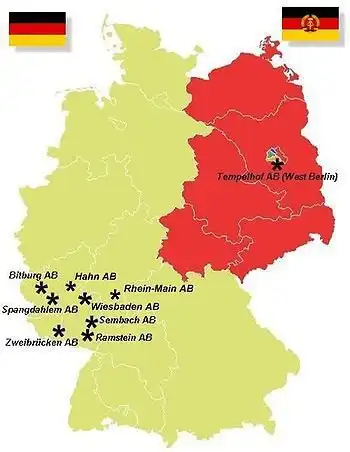
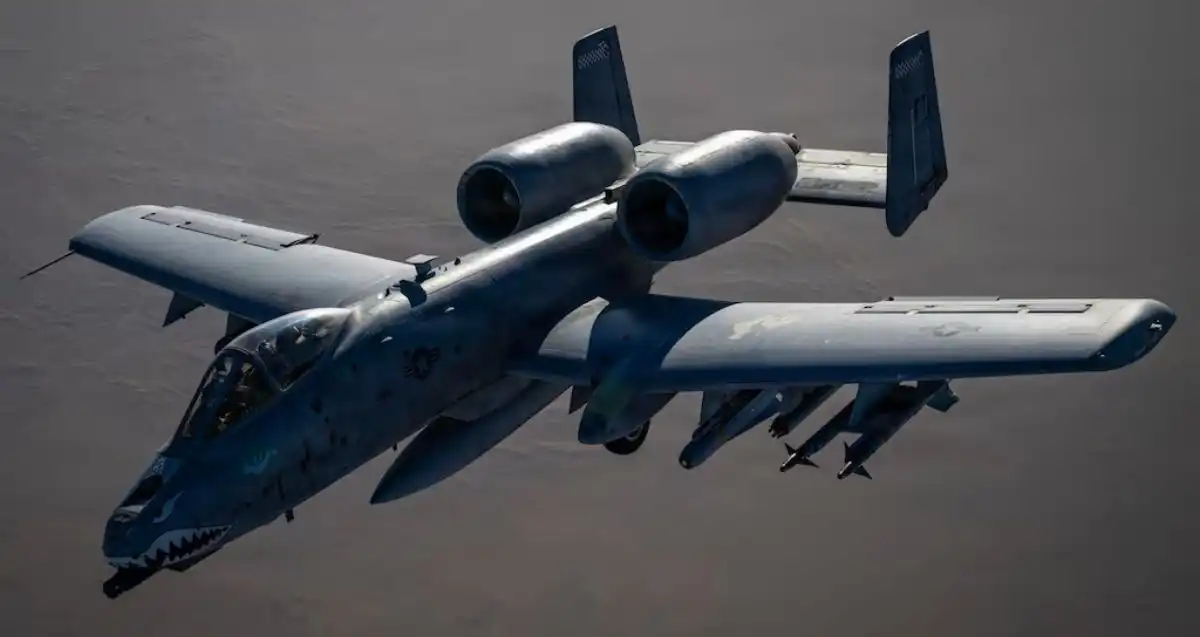
‘This dedicated anti-armor mission also led to the development of one of the world’s most iconic airplanes, the A-10, specifically designed to confront tanks in Europe.’
Zero parts commonality
He continues;
‘But wait, isn’t this about the Marines?
‘It is. What you will look for very hard but not find a lot of are Marine bases in Germany or Marine divisions stationed there. That’s because blunting an armored assault across the plains is not their job. Especially now that they’ve given up their M-1 Tanks. Their job is to assault beaches, and to fight from ships to support those beach landings.
‘The Apache could carry a little more and go a little faster than the Cobra, but it was twice the weight of a Cobra and also twice the price. It took up more space on deck and consumed more fuel, and was also more maintenance intensive.
‘It’s a similar story with the Huey and the Black Hawk. A little bigger, a little faster, but much more expensive.
‘More importantly, the Apache was a Hughes (now Boeing) product, and the Black Hawk was from Sikorsky. So, zero parts commonality [except for the GE T700 engine] with each other or either of the two Bell helicopters the Marines already had.
Fantastically lethal
‘So, the Marines decided they didn’t need the new toys, and kept upgrading and improving what they had in order to keep the very efficient system of common training, tools and interchangeable parts going.’
Leimbach concludes;
‘When you are on a ship with limited supply options, having the same rotor blades work on both aircraft is a huge advantage. Additionally, many of the ships stores compartments are designed around the size of engines and blades that were in service when the ships were built, and might not be able to easily accommodate parts for a different aircraft.
‘The new models are fantastically lethal, less expensive, and both save space and share parts, dramatically simplifying maintenance and logistics.’


Photo credit: U.S. Marine Corps, U.S. Army, U.S. Air Force and Unknown