
Jay Lacklen retired from the Air Force reserve in 2004 as a Lt Col with 12,500 flying hours. He taught Air Force T-1 pilot training simulators at Columbus AFB, Mississippi from 2005-2014. He grew up in Arlington, VA and graduated from the University of North Carolina-Chapel Hill in 1969. In addition to pilot training aircraft, he flew 330 hours in the C-7 Caribou, 2000 hours in the B-52 bomber, and 9,500 hours in the C-5 Galaxy transport.
He flew in all major military actions from Vietnam to the Iraq War. Lacklen lives in northern Virginia and is married with four adult daughters and two granddaughters.
Lacklen is also the author of three books, Flying the Line: An Air Force Pilot’s Journey, Flying the Line: An Air Force Pilot’s Journey Volume Two: Military Airlift Command and Flying the Line: An Air Force Pilot’s Journey Volume Three: Air Mobility Command. The following story comes the last book of the trilogy.
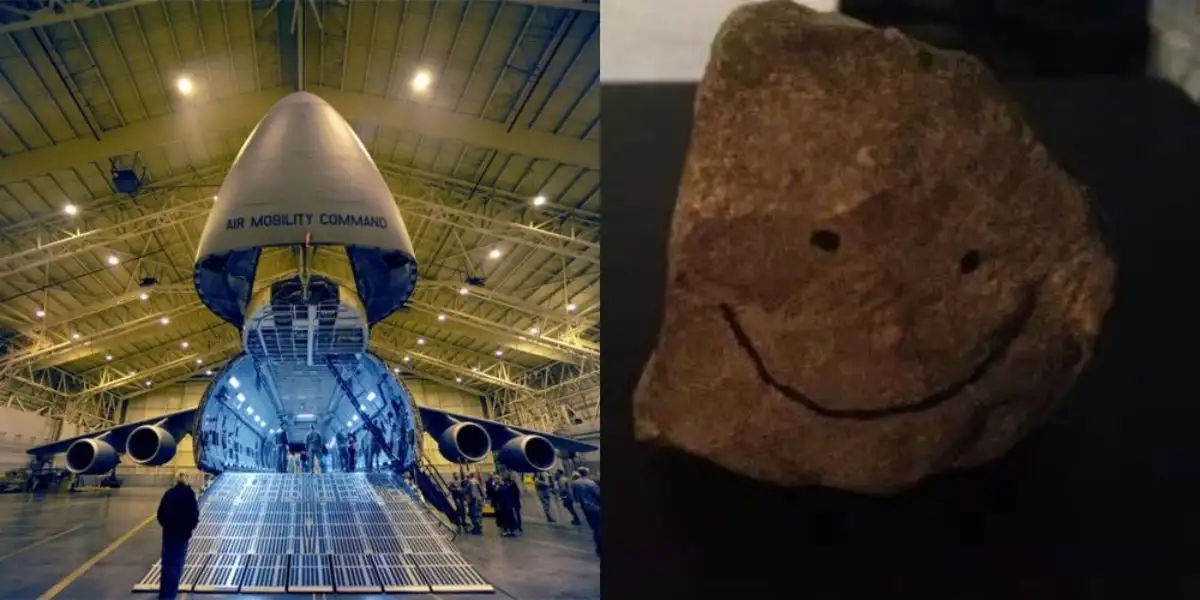
In the 1980s, the empty C-5 carrying no cargo could not gracefully complete local training missions for center of gravity (CG) considerations. Without cargo and with low fuel loads, the plane’s CG shifted perilously close to its aft limit. This could create control problems, to include possible loss of control, if not corrected.
The method used to correct the imbalance placed two 15,000-lb. concrete blocks in the forward most part of the cargo compartment to shift the center of gravity forward. On several occasions, locals were delayed because the “pet rocks,” as we called them, had to be loaded.
The name came from an inane Christmas novelty item of a fist-sized painted rock sent as a Christmas “pet” present. No, I could not make that up—the crazy 1980s!
The pet rock requirement arose from a cost-saving measure regarding aircraft wings. To stay within contract funding limits, the Air Force cut the weight and structure support for the aircraft wings. This resulted in a profoundly uneconomic result.
The weakened wings “flapped” at cruise, the wing tips moving up and down in flight. The two primary effects of this blunder to save money required re-winging all the aircraft with the original, stronger wings, and demanded pet rocks for local flights. Pet rocks remedied this problem until the new wings were installed.
Photo credit: U.S. Air Force
