In this article:
Environmental Control Systems
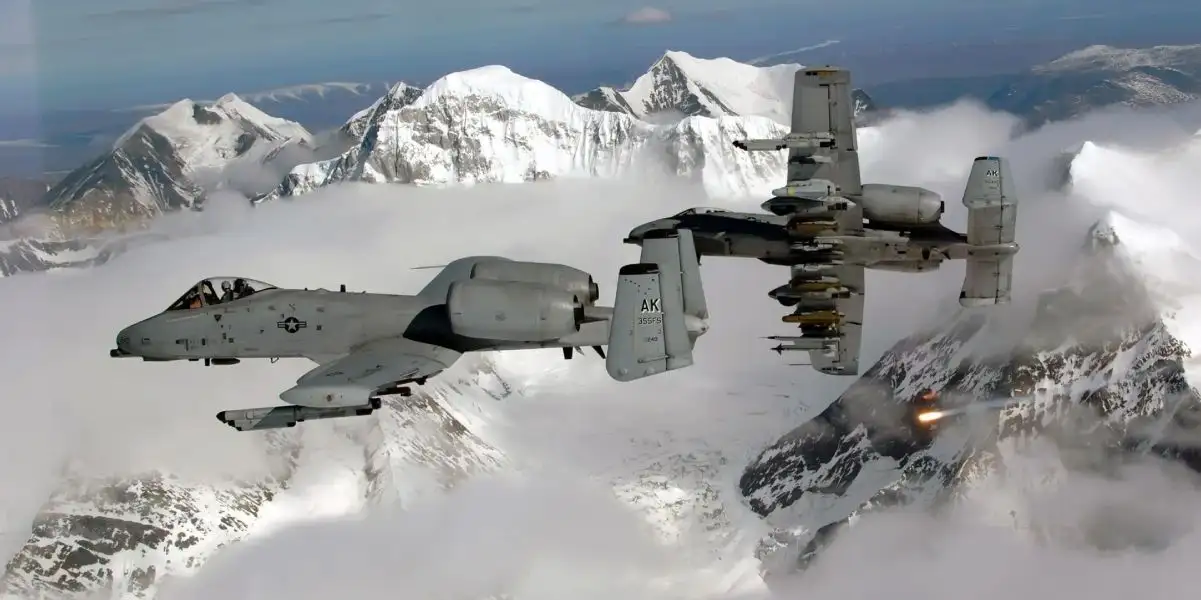
Environmental Control Systems (ECS) are crucial in maintaining the environmental conditions within an aircraft and similar platforms, ensuring comfort, safety, and optimal performance for both passengers and crew. These systems regulate temperature, humidity, and pressure, providing a stable and controlled atmosphere regardless of external conditions. ECS encompasses various components, including air conditioning, ventilation, heating, and pressurization systems, all of which work together to create a habitable environment in the aircraft’s cabin and other compartments.
Lynn Taylor, former US Air Force A-10 Thunderbolt II pilot, explains on Quora;
‘I don’t remember all of the technical wizardry that made the air conditioning system work (bypass air, ram air, blah blah… this was a while ago) on the A-10, but I remember that it also doubled as a projectile ice maker.
Fighter pilots running the air conditioning at full cold when flying in Alaska in the wintertime
‘If it ran on full cold long enough, ice would build up in the ducts. When maneuvering, or when taxiing, or when it felt like it, the ice would sometimes break loose and come shooting out of the vents at your more sensitive body parts.
‘Most of the heat buildup in the cockpit was from the sun beating down on you (much like the inside of your car in the summer). Or because you were wearing a lot of stuff.
‘Side note: (True story) We would often run the air conditioning at full cold when flying in Alaska in the wintertime.
‘”Why on Earth would you do that?” you rightly ask. “Isn’t it already friggin’ FREEZING?”

‘Because you always need to “dress to egress.” Just in case we had to eject, and had to wait more than five minutes to get picked up on the Alaska tundra in the middle of winter, we wore three layers of very warm clothes. Trés hot. So, it’s twenty below outside the cockpit, but you’re sweating like you’re in a sauna. Hence, run the ice maker full “ON.”
‘We didn’t fly when it got colder than -20 for sure. It might have been 0, but I don’t remember. In either case, yes.
‘Not only do the jets not like it when it’s that cold, it reaches a point where, if you have to eject, your life expectancy is ridiculously short. You always have to plan for that possibility.
‘Also, I think we didn’t even go in to work when it was -40 or colder. It just wasn’t worth the risk of getting stuck partway home and getting found in the Spring.
Defogging the front windscreen
‘There is a separate controller for defogging the front windscreen. I think it is all part of the same air conditioning system, but it is possible to run one without the other.
Taylor concludes;
‘I do remember that the windscreen defog is one of the steps in the pre-descent checklist. I remember that one in particular because one time I forgot to do that step. Yeah, that was embarrassing to have to abort a landing and go into a holding pattern while my windscreen cleared up. Shame can be a great teacher.’

Photo credit: Master Sgt. Robert Wieland / U.S. Air Force


