The Skyknight
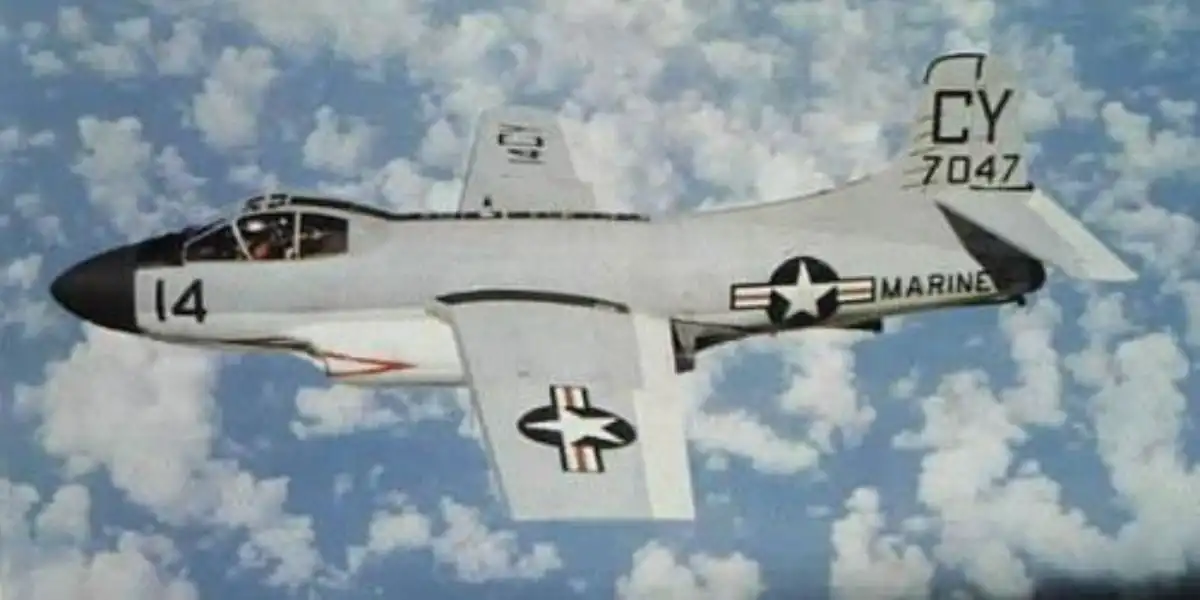
The Douglas F3D Skyknight was an early but effective attempt at combining new technologies together in a lethal package capable of shipboard operation. Whereas most fighters relied on speed and maneuverability, the portly, straight-winged F3D relied on three radars, four 20mm cannon, and – most importantly – darkness. Having first flown in March 1948, the Skyknight’s first taste of war came in September 1952, when Marine Night Fighter Squadron 513 [VMF(N)-513] deployed to Korea.
After the war, 35 Skyknights were converted into electronic warfare (EW) aircraft. As US air operations over North Vietnam intensified in early 1965, the need for a tactical EW jet to provide electronic countermeasures (ECM) protection to accompany strike packages north became apparent.
As explained by Joe Copalman in his book F3D/EF-10 Skyknight Units of the Korean and Vietnam Wars, although an EW platform, the EF-10B Skyknight carried a K-17 reconnaissance camera in the rear fuselage.
In August 1966, EF-10 crews from VMCJ-1 at Da Nang detected a ‘Cross Slot’ early warning radar just north of the DMZ separating North and South Vietnam. To accurately fix the radar’s position for an air strike, crews needed reconnaissance photographs of the site. Seventh Air Force – which ran the air war from Saigon – restricted US Marine Corps photo-reconnaissance aircraft from flying north of the DMZ, meaning VMCJ-1’s RF-8A Crusaders could not verify the ‘Cross Slot’s’ location. Maj Jim Doyle, an ECMO from VMCJ-1, serving as the US Marine Corps liaison officer to Seventh Air Force, ‘fragged’ an EF-10B sortie north of the DMZ, notionally to gather electronic intelligence. Unaware that the EF-10B also carried a camera, the USAF approved the mission.
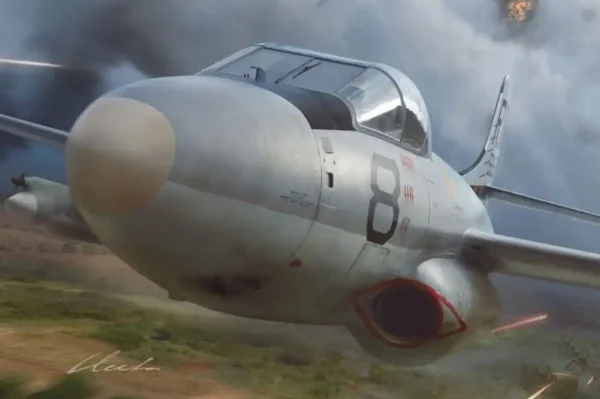
EF-10 flying at treetop level over North Vietnam
On Aug. 24, 1Lts Gail Sublett (pilot) and H Wayne Whitten (ECMO) flew the special photo-reconnaissance mission in EF-10B BuNo 125869, passing over the suspected radar site at 10,000 ft and taking photogaphs. Sublett and Whitten then agreed on a second pass at low altitude to try and visually acquire the radar. Flying slightly above treetop level, they drew fire from several AAA guns and automatic weapons, with their ‘Whale’ taking a round from the latter through its nose.
Sublett and Whitten’s photos confirmed the radar’s location, which led to Seventh Air Force approving a RF-8 mission by VMCJ-1 to photograph the site. With targeting-quality imagery for strike planning, US Marine Corps F-4 Phantom II and F-8 Crusader crews flew a mission against the site, destroying the ‘Cross Slot’. The operation was executed entirely by MAG-11 crews and aircraft, and demonstrated what VMCJ-1 brought to the fight.
F3D/EF-10 Skyknight Units of the Korean and Vietnam Wars is published by Osprey Publishing and is available to order here.
Photo credit: U.S. Marine Corps