In this article:
J-20’s ‘Beast Mode’

Emerging as the new backbone of China’s fighter fleet, the J-20 is being equipped for new roles previously carried out by older J-16s, with its new non-stealth loadout being optimal for specific missions.
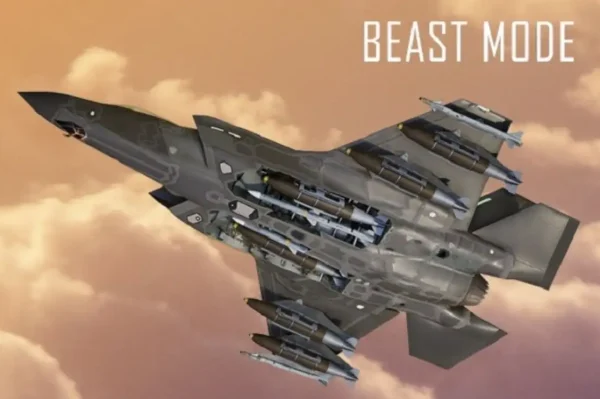
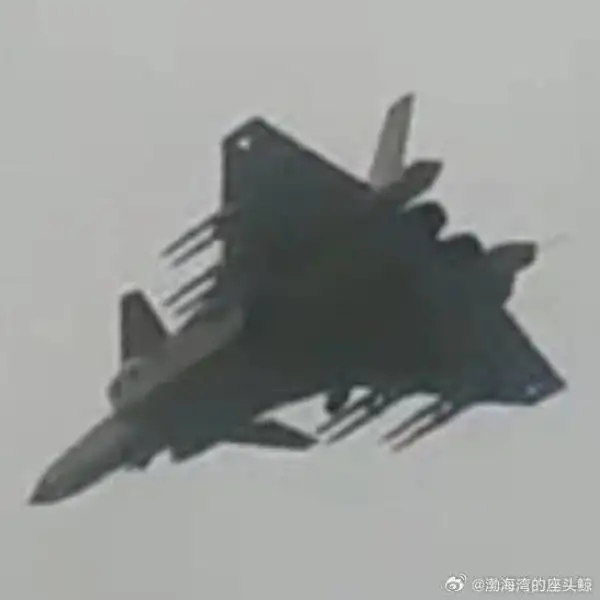
On February 10 images released on Chinese social media for the first time showed the J-20 fifth generation fighter carrying armaments externally, with four missiles which appeared to be beyond visual range PL-15s carried under each wing. This payload supplements the fighter’s internal weapons bay capacity of up to eight missiles, providing a significant increase to its firepower. Although the J-20 has been seen carrying external fuel tanks in the past, albeit far less often than its American rival the F-22, external weapons carriage appears to be a novel development for the fighter indicating that it may be being utilised for new roles in the Chinese People’s Liberation Army Air Force (PLAAF).
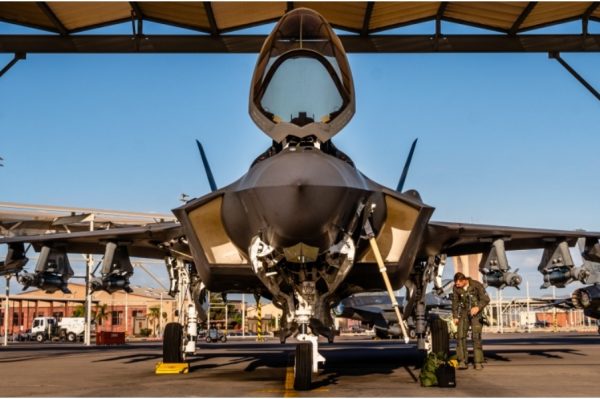
With the J-20’s advanced radar evading capabilities depending heavily on it maintaining a low radar cross section, carriage of weapons or fuel beyond what can be accommodated in its internal bays and tanks seriously compromises this. Nevertheless, external carriage of air-to-air missiles has notable advantages, and allows the J-20 to operate more effectively in a number of roles that were previously expected to be allocated primarily to fourth generation fighters, for which stealth is less of a necessity.
Large quantities of air-to-air missiles
The benefits of fielding fighters capable of carrying large quantities of air-to-air missiles and operating over long ranges was recently demonstrated by U.S. Air Force F-15Es under 494th and 335th Fighter Squadrons, which were employed on April 13, 2024 to counter a mass Iranian drone strike on Israel. Capable of carrying significantly more ordinance than a stealth configured F-22 or F-35, and of operating over longer distances, the F-15s were reportedly able to shoot down more than 70 targets. As repeatedly highlighted by pilots involved in the mission, even for the F-15 running out of air-to-air missiles was a primary factor restricting their effectiveness.

For the PLAAF, the significant investments in similar mass drone attack capabilities by the rival Republic of China Air Force operating across the Taiwan Strait provides a strong incentive to develop a configuration for its primary fighter that is well suited to tackling large numbers of low level threats. Pentagon plans confirmed in 2024 to develop means to turn the Taiwan Strait into a “drone hellscape” using similar swarms only strengthens the incentive to do so. Other than drones, configuring J-20s to carry more missile at the expense of their stealth capabilities is also considered optimal for defence against cruise missile attacks, with the fighter’s deployment near major cities and military bases across the country potentially allowing it to play an important role.
PL-XX
While in the Western world the F-15 remains the only heavyweight fighter that combines a long range and large sensor suite with a high weapons carrying capacity, China deploys multiple aircraft with such characteristics, with the most widely fielded being the PLAAF’s J-11, J-16 and J-20. The J-16 was previously expected to be the optimal fighter for combating threats such as drone swarms, and combines a similarly long range and large radar to the J-20, while lacking a requirement for internal weapons carriage due to its fourth generation non-stealth airframe design.
With production of the J-20 having increased considerably, however, and the most conservative estimates indicating annual procurements are two to three times as high as those of the J-16, ensuring that the much more widely operated fighter is capable of operating effectively in roles for which the J-16 was previously considered better optimised will increase the fleet’s versatility. This could be key to facilitating a phasing of the J-16 out of production before 2030.
Beyond the quantities of armaments carried and their value for tacking large quantities of drones or cruise missiles, external missile carriage also raises the possibility that the J-20 will integrate China’s longest ranged air-to-air missile class the PL-XX, which was previously carried by the J-11 and J-16. With a range estimated at 400-500 kilometres, the oversized missile is too large to fit inside internal weapons bays, but is likely to be compatible with J-20s if externally mounted.
J-20’s ‘Beast Mode’ to increase the number of roles it can fulfil
The missile class is thought to be fielded primarily to neutralise high value support aircraft such as E-7 airborne early warning and control (AEW&C) systems, KC-135 tankers and EP-3E electronic warfare planes, all of which are large and unmaneouverable, as well as strategic bombers such as the B-52H.
Its range allows fighters to engage targets from safe distances well beyond the reaches of an adversary’s fighter escorts, which limits the need for stealth. Although the J-20 and J-16’s sensors are not considered able to guide missiles against targets 500 kilometres away, the missiles are expected to use targeting data from supporting assets such as KJ-500 AEW&Cs and stealth configured J-20s flying further forward.
The J-20’s ability to operate with larger quantities of missiles, or with very long ranged ‘AEW&C killer’ missiles, significantly increases the number of roles it can be optimised to fulfil, and creates significant overlaps with the roles previously expected to be allocated to the J-16. It was long anticipated that as the J-20’s numbers grew to form the backbone of the PLAAF’s fighter fleet, it would be utilised in a wider range of roles which would be reflected in its armaments suite. This versatility so far appears to be primarily coming in the form of a performing a wider range of air-to-air duties.
Sixth generation air superiority fighters
While a key uncertainty in the J-20’s ability to fully replace the J-16 remains its operational costs and maintenance needs, should the fighter not be much more expensive to sustain, and be sustainable with comparable availability rates, this would provide a strong argument for maintaining larger scale procurements at the expense of other fighter programs. With the PLAAF expected to begin operating its first sixth generation air superiority fighters in the early 2030s, the J-20’s optimisation for roles other than high intensity engagements with enemy fighters could be key to allowing it to remain in production for longer. As was the case with the F-22, overspecialisation would otherwise risk providing an argument for cutting short production and procuring more versatile aircraft like the J-16.

Photo credit: Image via @人畜无害遥感星 from Weibo