In this article:
Bill Weaver
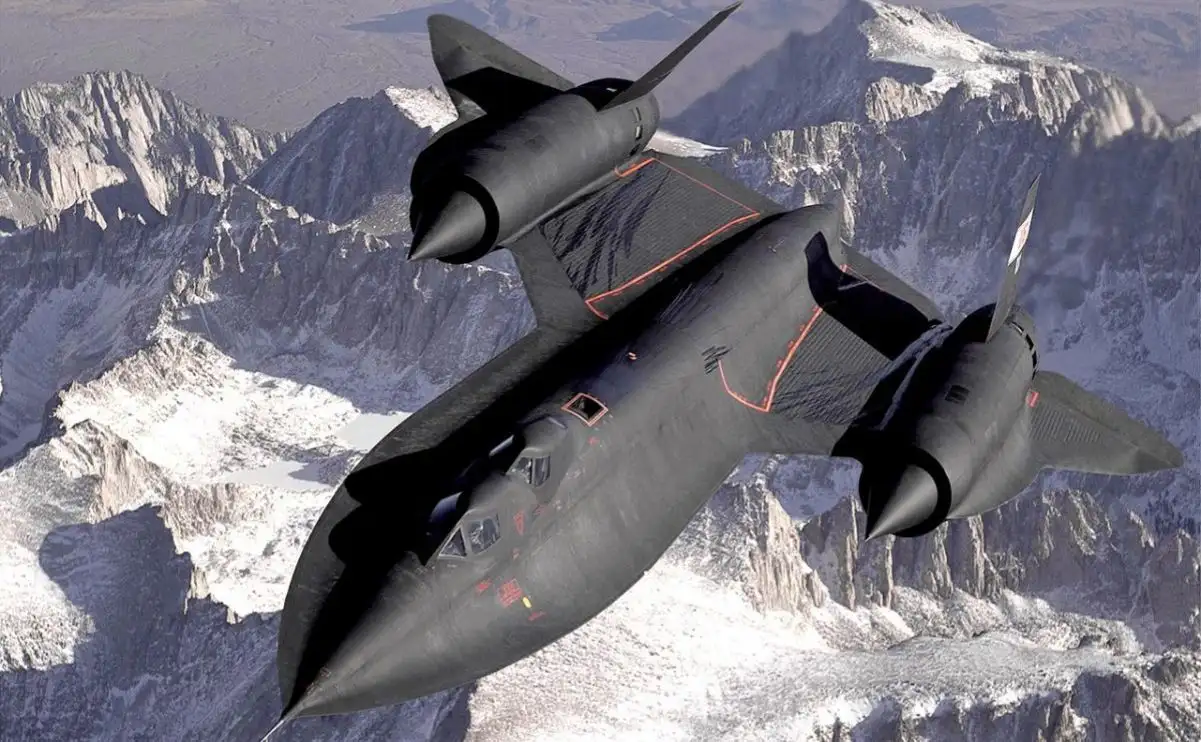
Bill Weaver was an SR-71 test flight pilot for Lockheed.
Weaver was born on Dec. 6, 1928 in the Hollywood Hospital in Los Angeles.
After one year of college at UCLA for a year before being accepted at Annapolis. Graduating June 1951, 25% of the graduates from Annapolis and West Point were offered the choice of joining the US Air Force formed in 1947. He chose the Air Force where he went through flight training at the Hondo Air Base near San Antonio, (South Texas Training Center & South Texas Regional Airport), built 4 months after the attack on Pearl Harbor in a record 90 days. Weaver graduated in class 52E and was sent to Williams AFB for advance training before deploying to Kaegu, Korea (T-2) in 1952 where he flew 89 missions in the F-89 Scorpion and F-86 Sabre.

The SR-71 that disintegrated at Mach 3
Leaving the USAF, he joined the Lockheed Skunk Works where his second cousin, Engineer Dorsey Kammerer worked for Kelly Johnson. During a span of 30 years at Lockheed, Bill flight tested all models of the Mach-2 F-104 Starfighter and the entire family of Mach 3+ Blackbirds–the A-12, YF-12 and SR-71. Weaver subsequently was assigned to Lockheed’s L-1011 project as an engineering test pilot, became the company’s chief pilot and retired as Division Manager of Commercial Flying Operations. He flew the Orbital Sciences Corp.’s L-1011, modified to carry a Pegasus satellite-launch vehicle. An FAA Designated Engineering Representative Flight Test Pilot, he was also involved in various aircraft-modification projects, conducting certification flight tests.
Weaver’s most memorable flight occurred on Jan. 25, 1966 when he ù bailed out after his SR-71 disintegrated while flying at Mach 3.18 at 78,800 feet and by some sort of miracle he made it down to New Mexico alive and well. The RSO Jim Zwayer was not so lucky.

There were problems with the faceplate on Weaver’s helmet that needed to be addressed… at 80,000 feet, the temperature outside is -65°, which is near the maximum altitude of a potential bail-out. He could not see from his face plate because of the ice buildup. Weaver’s faceplate was frozen.
This accident resulted in a heated face plate that required a battery pack. And that worked.
Shock expulsion system
Another significant problem was also solved after this flight as SR-71 pilot David Peters explains.
“The faceplate heat was a very important by-product of that accident. However, the most important was the SES system (shock expulsion system). The cause of Bill’s accident was an unstart on one inlet during a high Mach turn.

‘’Before this, there was no automatic restart system as such. When the inlet un-started, the violent yaw that was caused during the turn caused a complete loss of control so fast Bill was unable even to attempt a restart. Neither Bill nor Jim ejected. The aircraft broke apart around them. Jim broke his neck during the ejection.
“So, the engineers came up with the SES. What that does is keep the aircraft symmetrical in case of an unstart.
“If the sensor detects a .125 of a psi differential between the inlets, it goes into restart, which throws both spikes forward and opens both forward doors to allow the shock wave to be recaptured.
“The spikes then retract to the appropriate position for current Mach, and the doors regain automatic function. It happens so fast that the only way to tell which inlet unstarted is it was the one opposite of the side that you hit with your head.”
Be sure to check out Linda Sheffield Miller (Col Richard (Butch) Sheffield’s daughter, Col. Sheffield was an SR-71 Reconnaissance Systems Officer) Twitter Page Habubrats SR-71 and Facebook Page Born into the Wilde Blue Yonder for awesome Blackbird’s photos and stories.

Photo credit: U.S. Air Force and NASA


