In this article:
F-8 pilot Charlie Glasscock

The F-8 Crusader was the United States Navy’s first supersonic jet fighter. It was also the Navy’s last dedicated, gun-armed fighter jet. This distinction leads many to call the Crusader, “Last of the Gunfighters”. The F-8s superior combat exchange ratio (18 enemy planes shot down vs. 3 lost) against Vietnamese MiGs lead to a Vought representative to call the F-8E the “Mig Master”, the name stuck. A direct descendant of the classic Vought F4U Corsair, the Crusader did the unheard of when the prototype went supersonic on its’ maiden flight.
Aviation seems to be populated with more than its share of memorable personalities, especially carrier aviation. I was an F-8 Crusader pilot from 1963 to 1967, so I met my share of them, and one who stands out in my memory was fellow F-8 pilot Charlie Glasscock.

In the early 1960s, when Charlie and I started flight school, the new F-4 Phantom was in service, but a lot of guys wanted the F-8 because it seemed like the fighter pilot’s fighter. But you didn’t get selected for Crusaders unless you had the grades and your flight school instructors thought you could handle it. There was a reason for this selectiveness, as Charlie was to find out.
F-8 Crusader pilot hitting the ramp on His Initial Night Qual
After graduating from college, Navy flight training was a whole new challenge. Many couldn’t hack it and dropped out. Those who made it through had to learn a new way of thinking, and we put our butts on the line every time we strapped in and took to the air. This continued in the F-8 training squadron, the RAG (for replacement air group), where we were students in a supersonic killing machine.
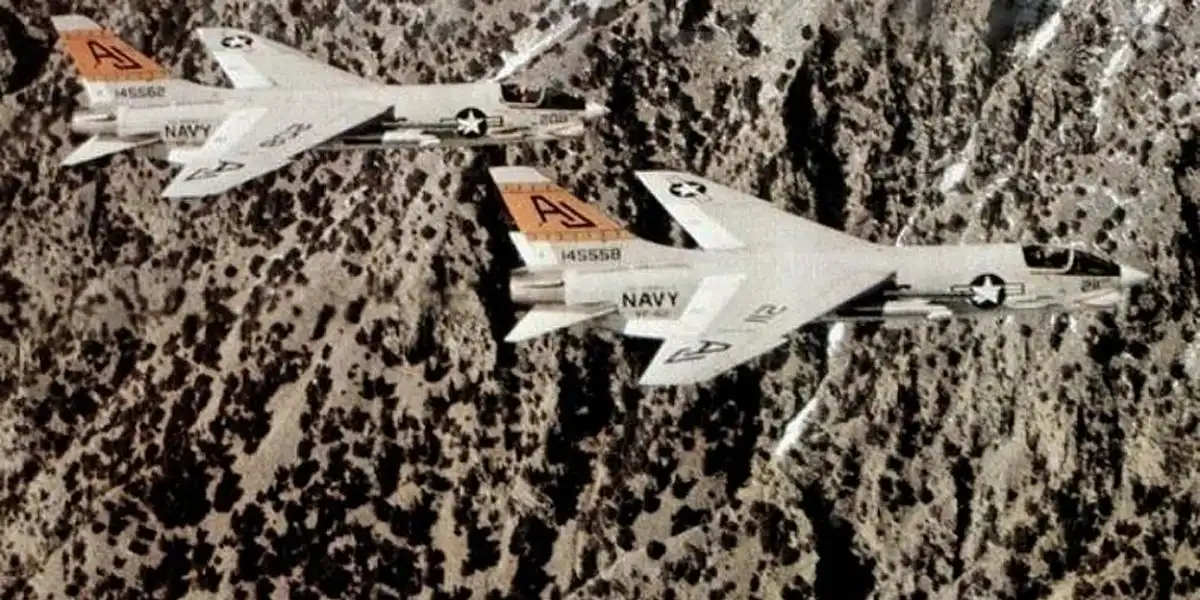
The “graduation exercise” from Crusader school was landing on a carrier both day and night. My guess is that most people think that landing on a carrier at night is difficult and even scary. They’re right. Preparation started with repeated landings at the airfield about a month before we hit the boat. (Pilots never referred to the carrier as a ship – always the boat.) We aimed for a rectangle the size of a carrier flight deck painted on the runway, and every landing was scrutinized, graded, and critiqued by Landing Signal Officers (LSOs).
Charlie got through all the training and field qualifications. He did fine and was approved to hit the boat.
Despite all the preparation and his solid performance, Charlie hit the ramp on his initial night qual. As his Crusader broke up from the impact, he ejected. He made it through the ordeal and was taken to sick bay for evaluation. All he could think of was that he was finished in the Navy; he figured they would never let him fly again.
“Get back on the horse”
Then the skipper came in and asked if he could fly the following night.
That was the “get back on the horse” philosophy that saved many a promising flying career (in the years before the zero defect mentality).
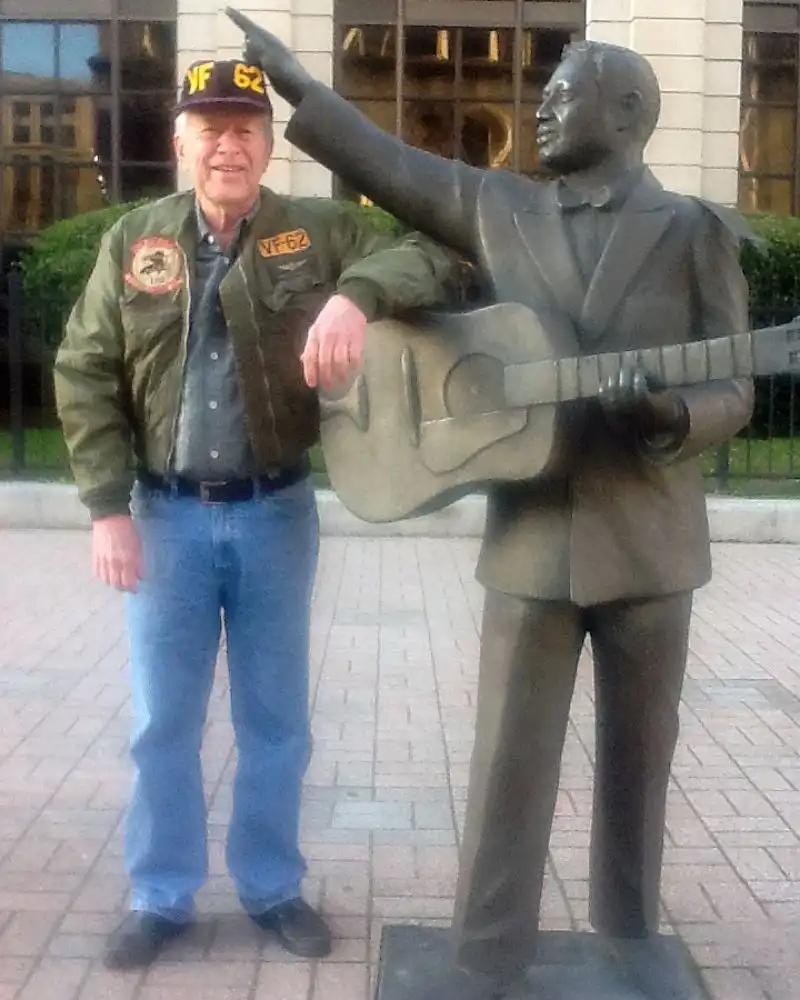
When Charlie joined the fleet, he was assigned to Fighter Squadron 62 (VF-62), the Boomerangs. I was assigned to VF-13, so we were in the same air wing. Charlie’s callsign was “Tuna,” after the popular mascot for StarKist brand tuna. Charlie was calm on the ground, almost reserved, but he was a wild man at the controls of any machine. During an air wing training detachment to NAS Key West, he went back to Jacksonville to pick up a brand new Oldsmobile Toronado – a large and powerful car that had just been introduced as a personal luxury vehicle. In a hurry to return to the det, he averaged 80 mph driving back to Key West – impressive in the years before Interstate highways were completed.
No dogfighting

In 1966, workups for another deployment to the Mediterranean included a det to the Naval Station at Guantanamo Bay, Cuba, aboard the USS Shangri La. CAG gave us all strict orders: NO HASSELING. That means no dogfighting, and it was fairly common in those days, to reduce risk of loss as we were close to deployment. Many of us went to the club on base and were watching the nightly movie out by the pool when our attention was diverted to burner puffs overhead from an F-8 chasing A-4 Skyhawks. CAG asked the F-8 skippers who was flying. Our skipper said no one. VF-62’s skipper said, “Only one: Charlie.”
You have to applaud that kind of enthusiasm for the mission.
After the Navy, Charlie flew for Western Airlines until he got furloughed. He then went to work for his family’s oil and gas business in Louisiana. I consider myself fortunate to count him as a friend.


