In this article:
3 USAF F-15E Jets Shot Down in Friendly Fire Incidents
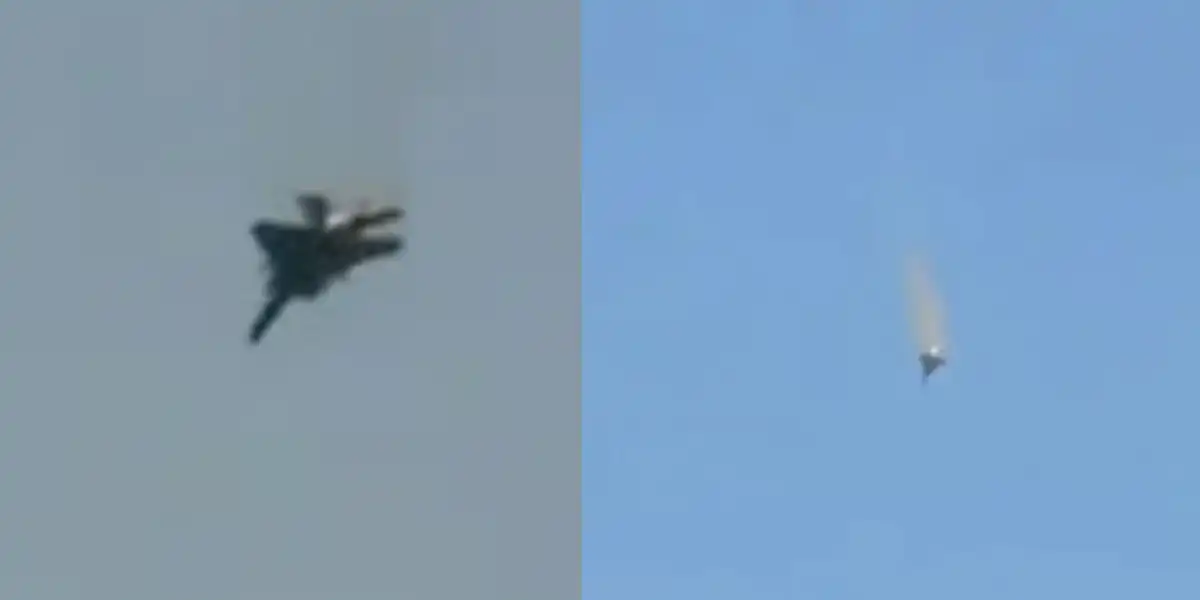
The US Central Command (CENTCOM) – the command node directing joint Operation Epic Fury against Iran – said on Mar. 2 that three F-15E ‘Strike Eagle’ fighter jets were shot down in separate ‘friendly fire’ incidents by Kuwaiti air defences.
“All six aircrew (two per plane) ejected safely, have been safely recovered, and are in stable condition. Kuwait has acknowledged this incident, and we are grateful for the efforts of the Kuwaiti defence forces and their support in this ongoing operation,” CENTCOM said.
“Several US military aircraft had crashed,” Kuwait said earlier.
As already reported, a video appeared on the web showed a US Air Force (USAF) F-15E Strike Eagle fighter jet going down in Kuwait amid the current regional tensions. The aircraft came down in northern Kuwait near the Iraqi border, reportedly in a sparsely populated area close to the Khor Abdullah waterway, which separates Iraq and Kuwait.
Both crew members onboard, the pilot and the Weapons Systems Officer (WSO), survived the crash and were later found by locals and handed over to Kuwaiti authorities, early reports indicate. The two crew members were located by residents shortly after they landed and provided immediate assistance before informing authorities. Both airmen remained in stable condition, with no reports of serious injuries.
The F-15E went down during active combat operations on Day 3 of Operation Epic Fury, the US operation conducted against the Iranian regime.
Another clip shows one of the airmen sitting inside a civilian vehicle after landing, suggesting locals provided immediate shelter before authorities arrived. Officials have confirmed that both the pilot and the WSO are alive and have been transferred into Kuwaiti custody for safety and medical evaluation.
Shot down by Kuwaiti Air Defences
As reported by The Sunday Guardian, initial assessments point toward a friendly fire incident involving Kuwait’s Patriot missile systems. While no official confirmation has been issued, early reports suggest the aircraft may have been mistakenly identified as a hostile target during heightened alert conditions.

The Patriot system relies on radar tracking and encrypted identification systems to distinguish between friendly and enemy aircraft. During intense combat, even advanced systems can misclassify targets, especially when multiple threats flood radar screens simultaneously.
In other news, the first casualties of the campaign were confirmed by Washington: three American service members were killed at a US military base in Kuwait, marking a significant escalation in the conflict.
Iran’s Islamic Revolutionary Guard Corps (IRGC) claimed they hit military bases and oil tankers across the Gulf region, triggering security alerts and shipping disruptions near the Strait of Hormuz, one of the world’s most critical oil transit routes.
Patriot
The PAC-3 family of missiles defend against incoming threats using direct body-to-body contact that delivers exponentially more kinetic energy on the target than can be achieved with blast-fragmentation mechanisms.
Building on the combat-proven PAC-3 Cost Reduction Initiative (CRI), the PAC-3 Missile Segment Enhancement (MSE) expands the lethal battlespace with a two-pulse solid rocket motor, providing increased performance in altitude and range.
PAC-3 has demonstrated integration with the THAAD Weapon System, the U.S. Army’s Integrated Air and Missile Defense Battle Command System (IBCS) and F-35, the most advanced node in the 21st century warfare network-centric architecture.

Photo credit: Photographers Mate 3rd Class Jonathan Chandler / U.S. Navy

